Every nursery group plans for September. Room allocations go out in June, staffing rotas follow in July, intake lists are confirmed with parents over the summer, and someone updates the occupancy dashboard to show the new term filling up nicely. By the time August ends, everything looks sorted on paper.
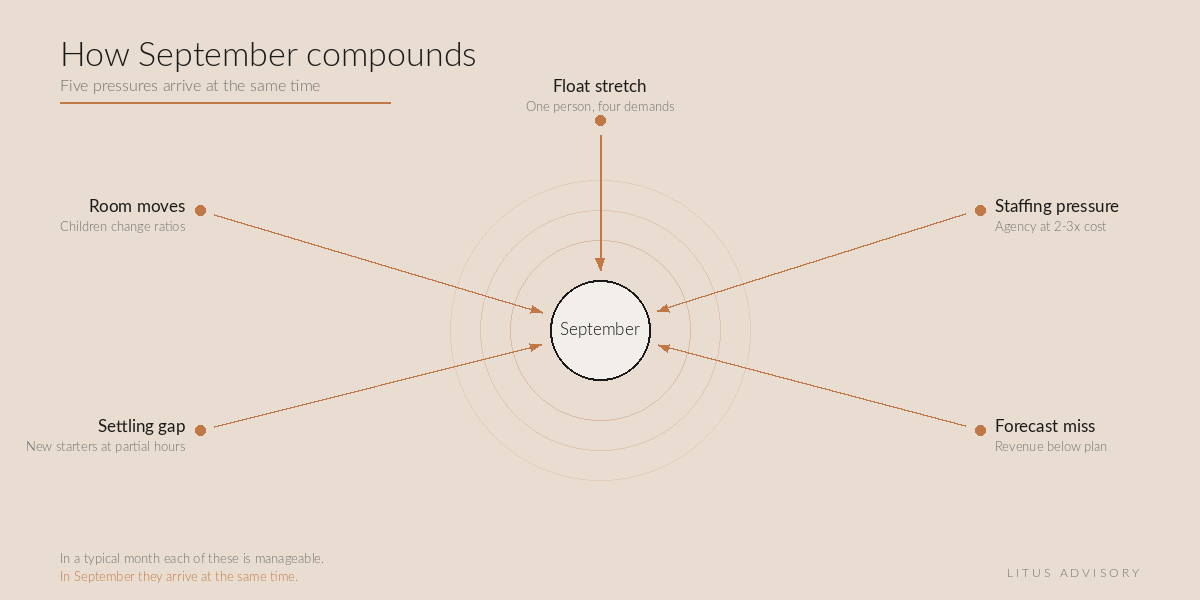
Then September starts and three children who were confirmed for the preschool room aren’t ready to move up from the twos room, so both rooms are running at the wrong numbers. Half the new starters are still doing settling sessions in week two. A practitioner who was due back from leave has extended by a month. And the float who was supposed to cover two lunch breaks is now covering a settling session in the baby room, an absent room leader in the twos, and a transition visit upstairs.
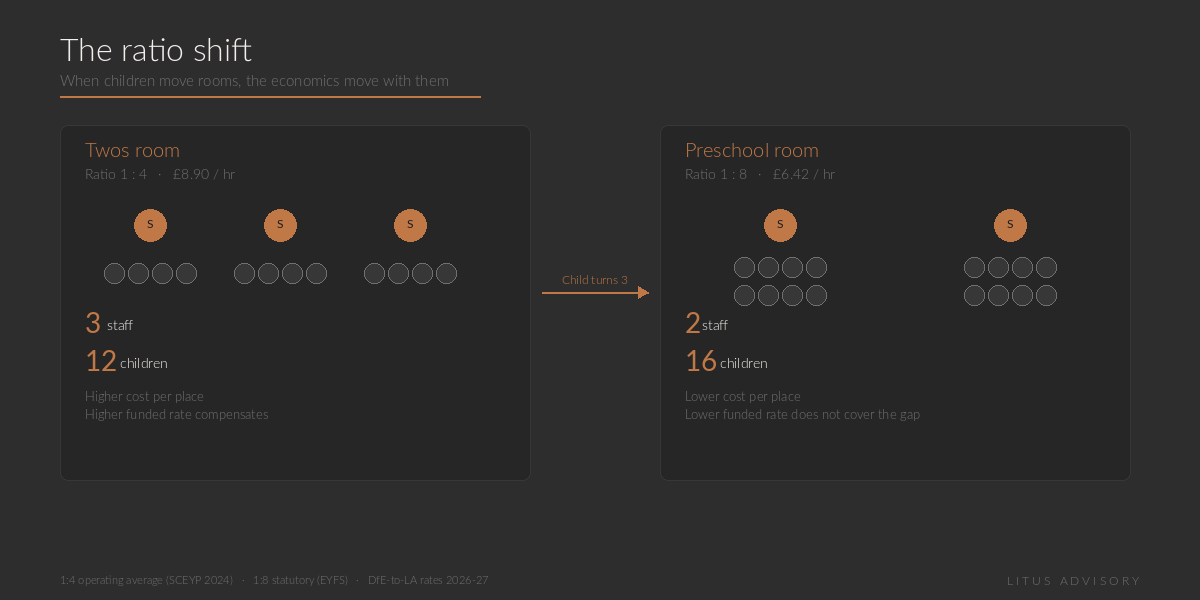
The biggest change in September is children moving rooms. A child who turns three moves from a ratio of 1:4 in the twos room to 1:8 in the preschool room. It looks like a saving because you need half the staff per child, but in my experience it creates a staffing problem that most groups solve room by room rather than working it out across the building.
If your preschool room was planned for sixteen children from September and twelve have moved up, you’re running at 75% in that room but carrying the cost for sixteen. The twos room still has children who were supposed to move but aren’t ready, so you’re running over your planned numbers there. Your overall headcount is fine but the numbers in each room are wrong in both directions.
The settling-in period makes this worse, because most nurseries offer new starters two to four weeks of settling sessions, starting with an hour or two, building to a half day, then a full session by week three or four. That’s good practice and children need it. But if you have six or eight new starters in one room and they’re all settling at the same time, your revenue for that room in September is well below what the occupancy figure suggests.
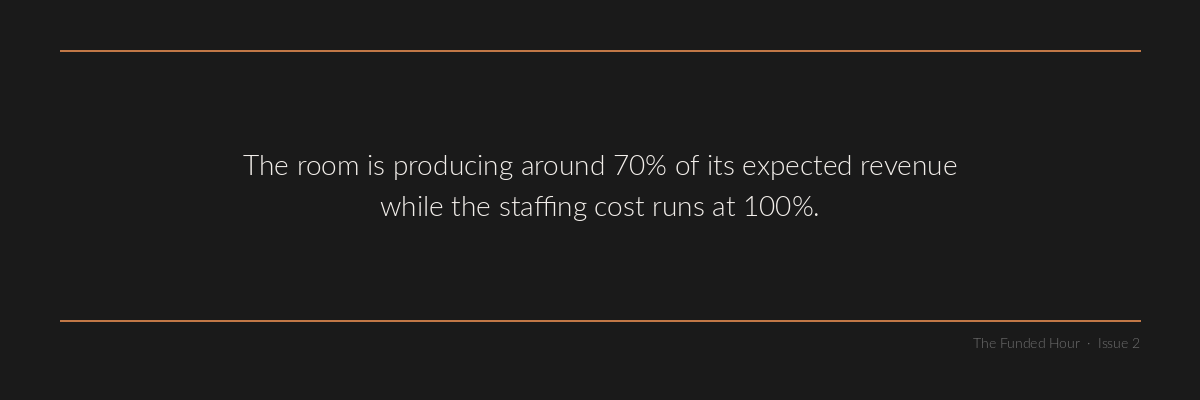
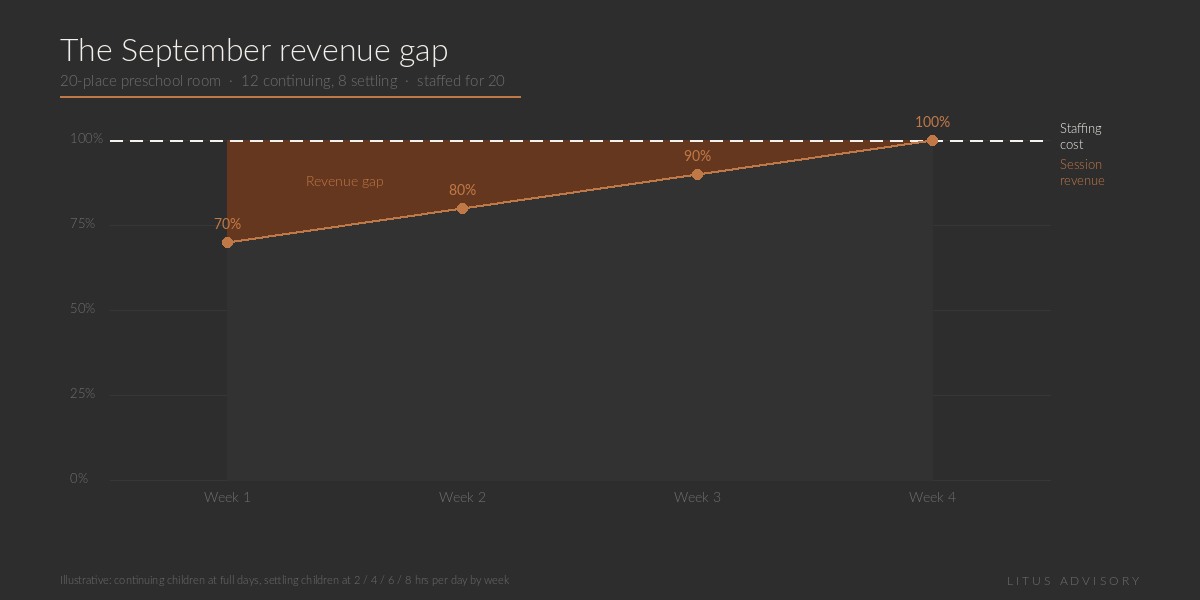
Take a preschool room with twenty places, staffed with three practitioners at 1:8. Twelve continuing children attend full days from day one. Eight new starters join on settling schedules, two hours a day in the first week, building to four, then six, then full sessions by week four. The room shows twenty out of twenty on the occupancy report. But across the first fortnight, those eight children are each attending for just over a third of the hours of a child who is there full time. The room is producing around 70% of its expected revenue while the staffing cost runs at 100%. That gap narrows through the month, but by the time the room reaches full sessions the September shortfall has already happened, and from what I see most groups don’t track it at room level. It sits inside the monthly accounts as part of a blended number and nobody asks why September looked thin.
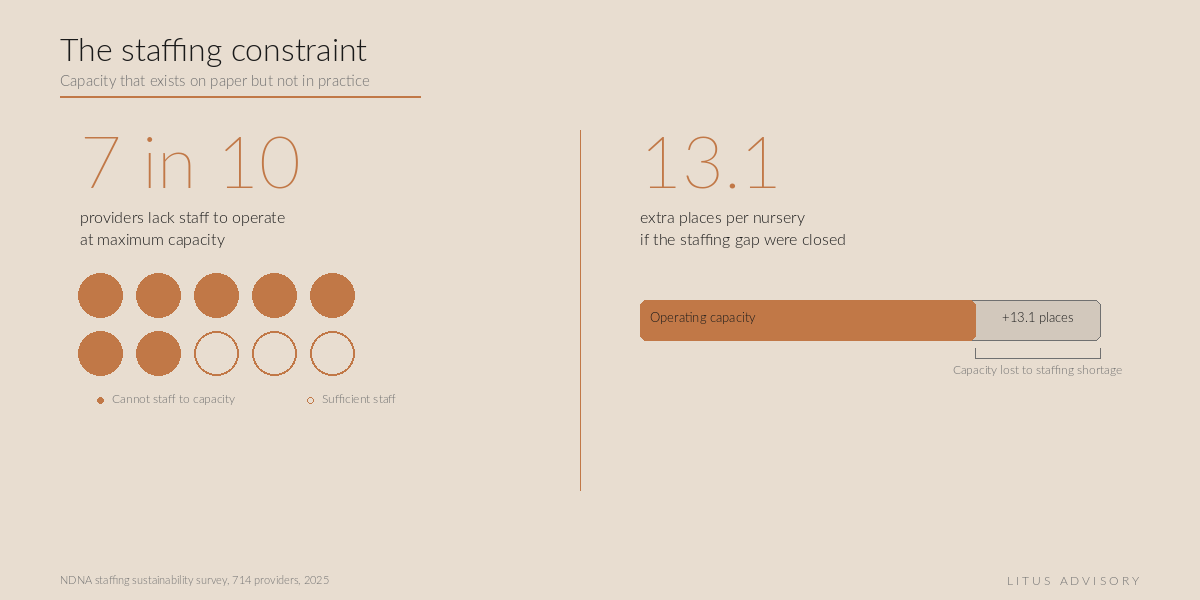
The float model that gets the building through a normal month breaks in September. The same one or two people are covering settling sessions, lunch breaks, an unplanned absence, and a room transition visit at the same time, and when the building needs one more thing, someone brings in agency cover which in my experience costs two to three times the permanent hourly rate. NDNA research ahead of the September 2025 entitlement expansion found that seven in ten providers did not have sufficient staff to operate at maximum capacity, and the average nursery could create over thirteen additional places if staffing were not the constraint. That capacity gap is year-round, but September is when it all hits at once.
The groups that manage September well don’t have better luck with their intake lists. They treat September as a transition month, not a trading month, and the revenue gap from settling goes into the annual forecast before October. They work through the room transitions over the summer because not every child will move on the date the parent agreed. And they plan the float for September itself instead of averaging it across the term.
If you run a nursery group, September is the month when your room-level numbers and your group-level reporting are furthest apart. One room is full on the report but producing around 70% of its revenue, another is carrying more children than it planned for, and what each room costs to run is different because the ratios are different. Your management accounts won’t show you the room-level picture until October, and by then it’s too late to do anything about this September.
If you haven’t done this exercise for your own rooms, start with one. Take the room with the most new starters expected in September, map out the settling schedule week by week, and calculate what that room will earn in each of those weeks against what it costs to staff. That’s the number your annual forecast should already contain. If you run this exercise in the next few weeks you have time to plan around it. By October the numbers are in the accounts.
Whether you’re running the group or looking at it from the outside, September is where you find out if the operation can handle a month with every room under pressure at the same time, and that’s not something you’ll find in the board pack.